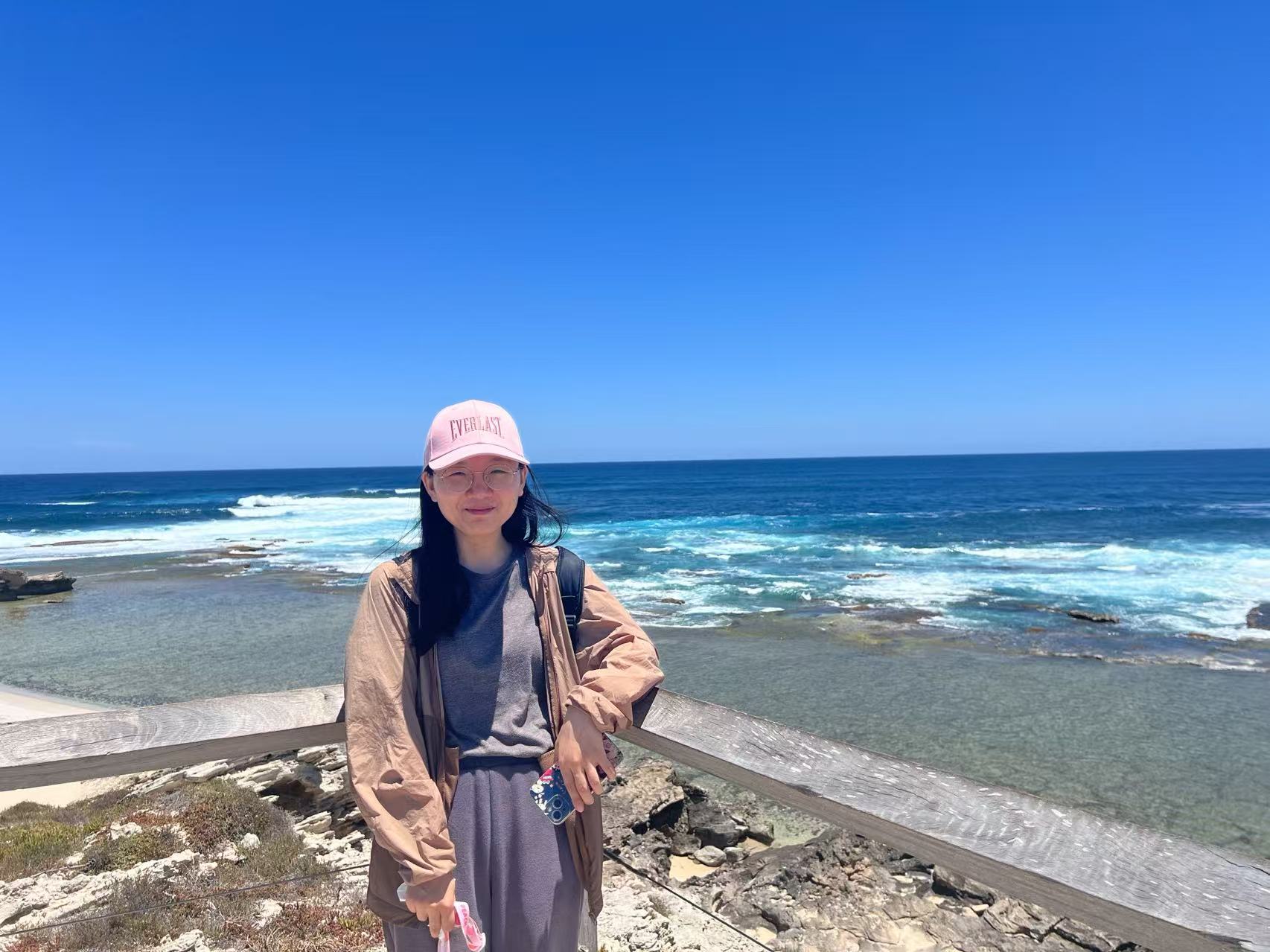
Xiaoge Zhang
I am currently a Ph.D. student in Computer Science at The University of Western Australia. Previously, I received my master's degree in 2022 from the Institute of Computing, Chinese Academy of Sciences. Before that, I received my bachelor's degree in 2019 from Wuhan University. Before starting my Ph.D., I worked as a Machine Learning Engineer at ByteDance.
My research focuses on 3D computer vision, with particular interests in efficient neural representations for 3D scenes and objects. Recent topics in my work include 3D Gaussian Splatting compression, Neural Radiance Field compression, LiDAR and point cloud compression, and multi-view stereo.
I am currently collaborating with Prof. Ajmal Mian, Dr. Saeed Anwar, Dr. Mehwish Nasim, and A/Prof. Mingtao Feng.
Publications
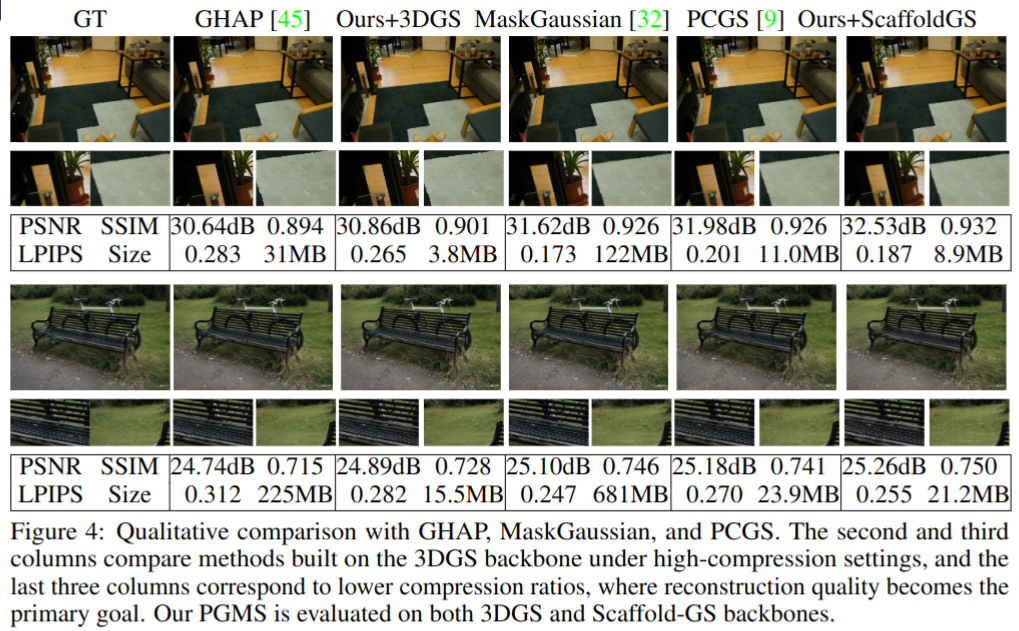
PGMS: Pyramidal Gaussian Mixture Splatting for 3DGS Compression
Preprint, 2026, 2026
PGMS introduces a plug-and-play 3DGS compression framework that reformulates dense Gaussian primitives into a rate-controllable pyramidal mixture representation, explicitly reducing the joint redundancy of geometry and appearance while preserving fine structural and visual details.
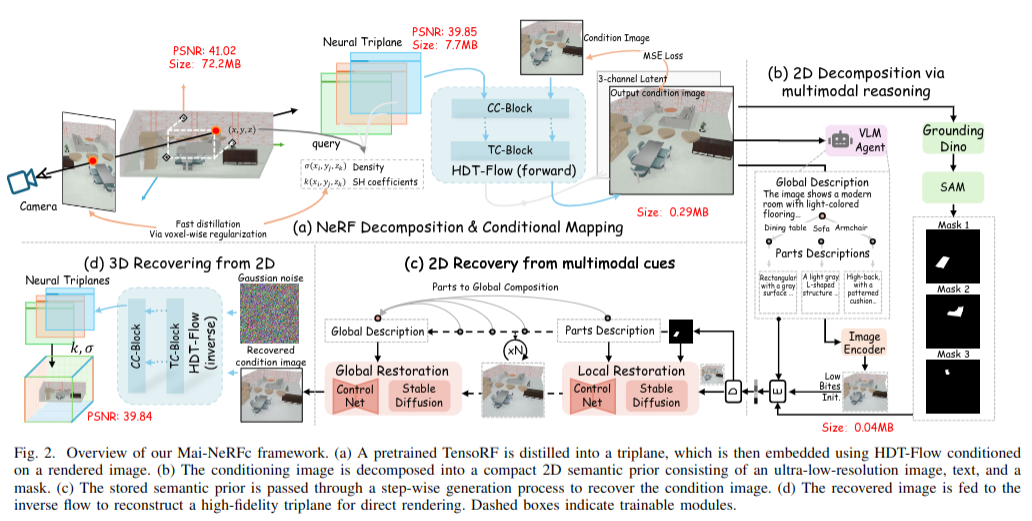
MAGiC-NeRF: Multimodal Generative Priors and Conditional Flow for Extreme NeRF Compression
Preprint, 2026, 2026
MaGic-NeRF introduces an extreme NeRF compression framework that distills trained radiance fields into compact triplanes and reconstructs them from highly compressed multimodal semantic priors.
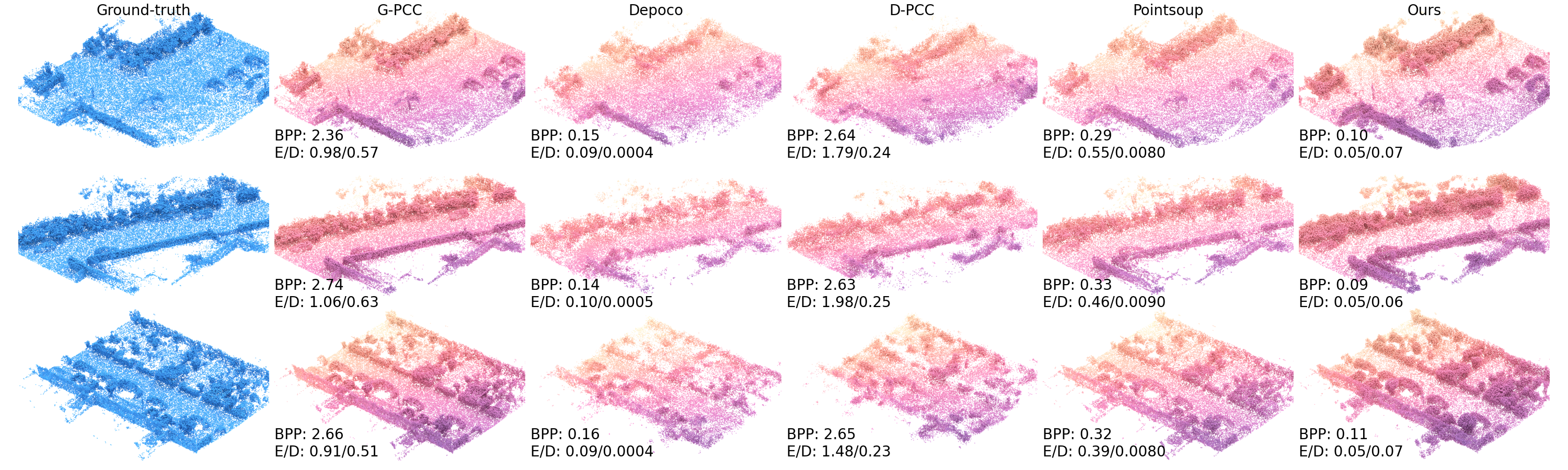
FLaTEC: Frequency-Disentangled Latent Triplanes for Efficient Compression of LiDAR Point Clouds
IEEE International Conference on Multimedia and Expo (ICME), 2026
FLaTEC presents a frequency-aware LiDAR point cloud compression framework that projects voxel features into compact triplanes and disentangles low- and high-frequency components for flexible bitrate allocation.
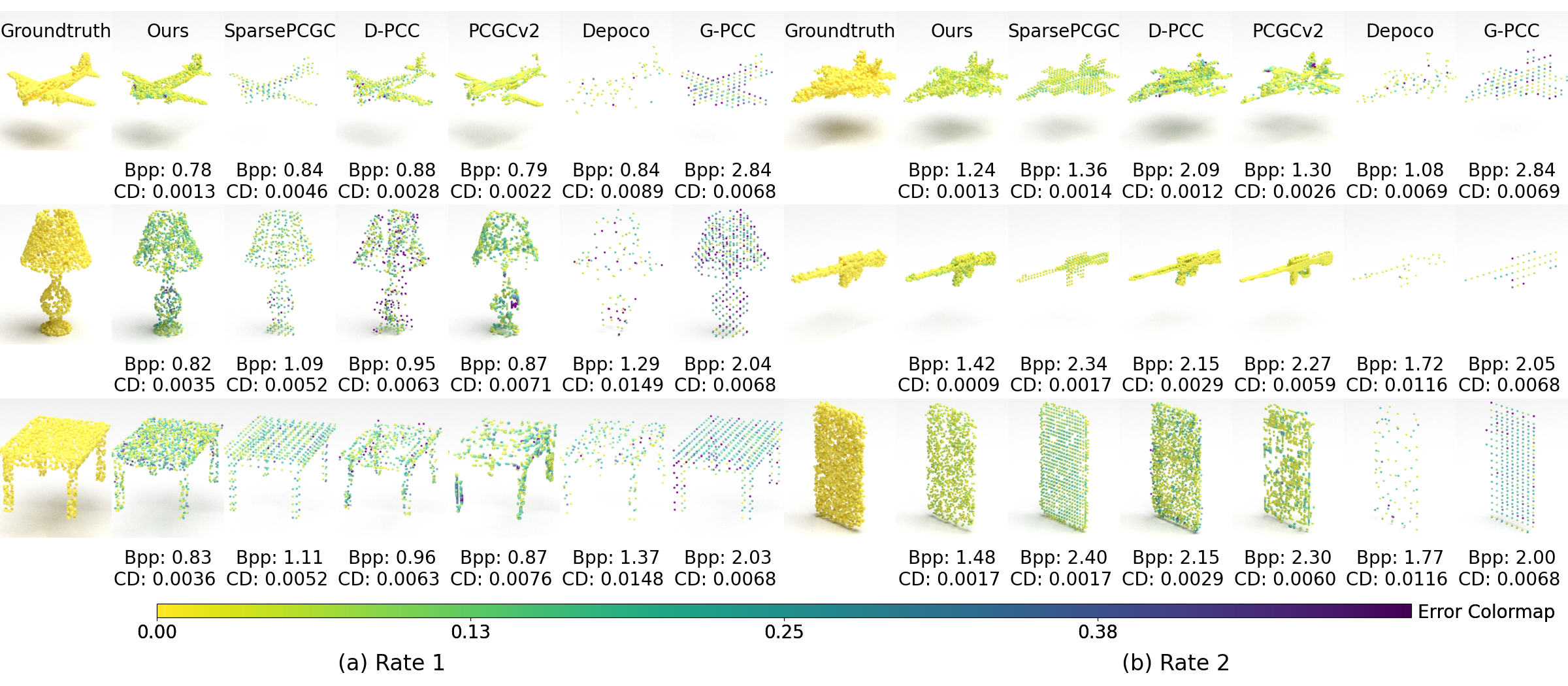
DiffCom: Decoupled Sparse Priors Guided Diffusion Compression for Point Clouds
IEEE Transactions on Circuits and Systems for Video Technology (TCSVT), 2026
DiffCom presents a diffusion-based point cloud compression framework that decouples storage-efficient sparse priors from reconstruction latents, reducing latent redundancy while preserving geometric fidelity.
Teaching
- Teaching Assistant, Semester 2, 2025
CITS4012 Natural Language Processing, The University of Western Australia - Teaching Assistant, Semester 1, 2026
CITS4404 Artificial Intelligence and Adaptive Systems, The University of Western Australia